

KINDERGARTEN 1
Take a glimpse of how a day in the life of a K1 child is like...
Our K1 Schedule!
The class accommodates children from 4 to 5 years old where we focus on the six developmental areas - Language & Literacy, Discovery of the World, Social Emotional Development, Motor Skills Development, Aesthetics & Creative Expression and Numeracy.

Their Learning Experiences
Take a look at what our children from the Kindergarten 1 class have been learning!
Term 1 : Our Community
In Term 1, our K1 children learned about the unsung heroes in our community.
Discussions were held on who are regarded as unsung heroes, and what does unsung heroes mean to them. Following the discussion, the children were then brought around the neighbourhood to identify the unsung heroes at work. This experience enabled the children to be more aware of the efforts these people have input into our community, and gave them an opportunity to learn to appreciate the efforts of others' hard work.
Back in class, the children were then invited to brainstorm of ways they can use to show their appreciation to these unsung heroes. To reduce the disruption that we might cause during their working hours, the class settled on making posters and 'thank you' cards. A visit was paid to the unsung heroes in our neighbourhood, and the children had lunch at one of the foodcourt, where they showed appreciation to the unsung heroes by clearing their own tray after meals.

Appreciation
The children made thank you cards and posters. They also gave small gifts to the unsung heroes.
Term 2 : Our Natural Environment
In Term 2, the children learned about the wildlife animals and their living habitat. Following a trip sponsored by the Mother Tongue Language Learning and Promotion Committees to the River Safari, the children had a gallery walk on what they have observed and learned about the animals in River Safari.
Thereafter, they contributed their areas of interests to the 'mindmap of wonders' and were introduced to the term 'wildlife animals' and its meaning. Following that, they looked into the habitual movements, diet and living environment of the animals.
A nature walk was conducted, and the children created an artwork with the use of the natural materials obtained from the walk. The artwork was created based on the Panda they saw at River Safari, as the children were most curious about it. They posed questions such as "where does the panda sleep?" and "how does a panda bath?".
The two teaching techniques demonstrated in the lesson are:
1. Guidance
2.Scaffolding

Guidance
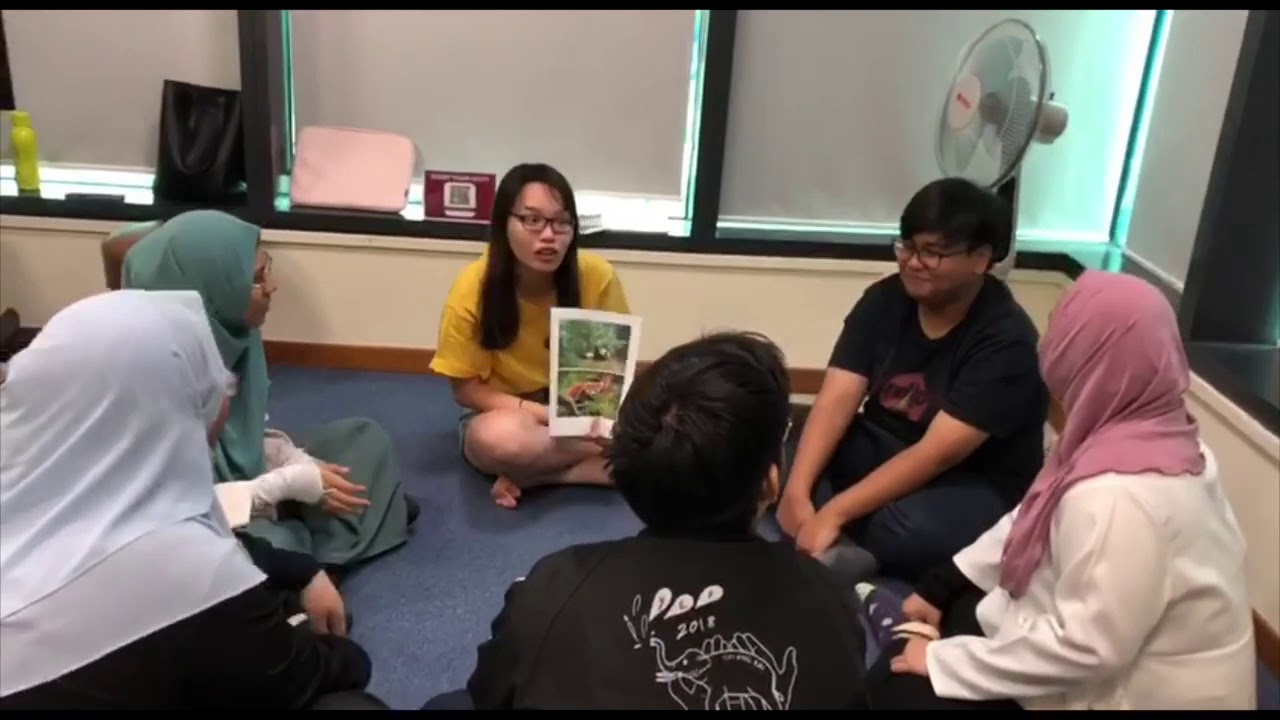
Ms Ja Lei guided the children by working with the children in setting boundaries and rules before she started off the lesson (Sanchez, Steece-Doran & Jablon, 2013). Settling rules and boundaries will enhance children's learning experience as it will serve as a reminder for children to remain attentive during lessons, aiding in their long-term achievement (Klein, 2008).
She also provided guidance consistently by getting the children to understand that if they would like to speak, they needed to raise their hands and wait for their turns. In this scenario, she provided guidance by being discreet and gentle, firm yet consistent (Sanchez, Steece-Doran & Jablon, 2013). This helps children recognise the importance of following the rules set.

Scaffolding
Ms. Ja Lei scaffolded the children's learning when she asked the children explicit questions to facilitate them in brainstorming for the answers (MacNaughton & Williams, 2009). Questions such as "what are some of the differences that you can identify between our living environment and an animal's living environment?" and "how are they different?" were asked. Asking relatable and specific questions will aid in children's exploration of new knowledge (MacNaughton & Williams, 2009).
She also scaffolded the children's learning by using explicit modelling (Mac Naughton & Williams, 2009). By modelling explicitly, children will have a better understanding on the skill demonstrated and be able to acquire the skill taught more efficiently and effectively (MacNaughton & Williams, 2009).
Scan the QR code below to take a look at the lesson plan!
